Skip to content
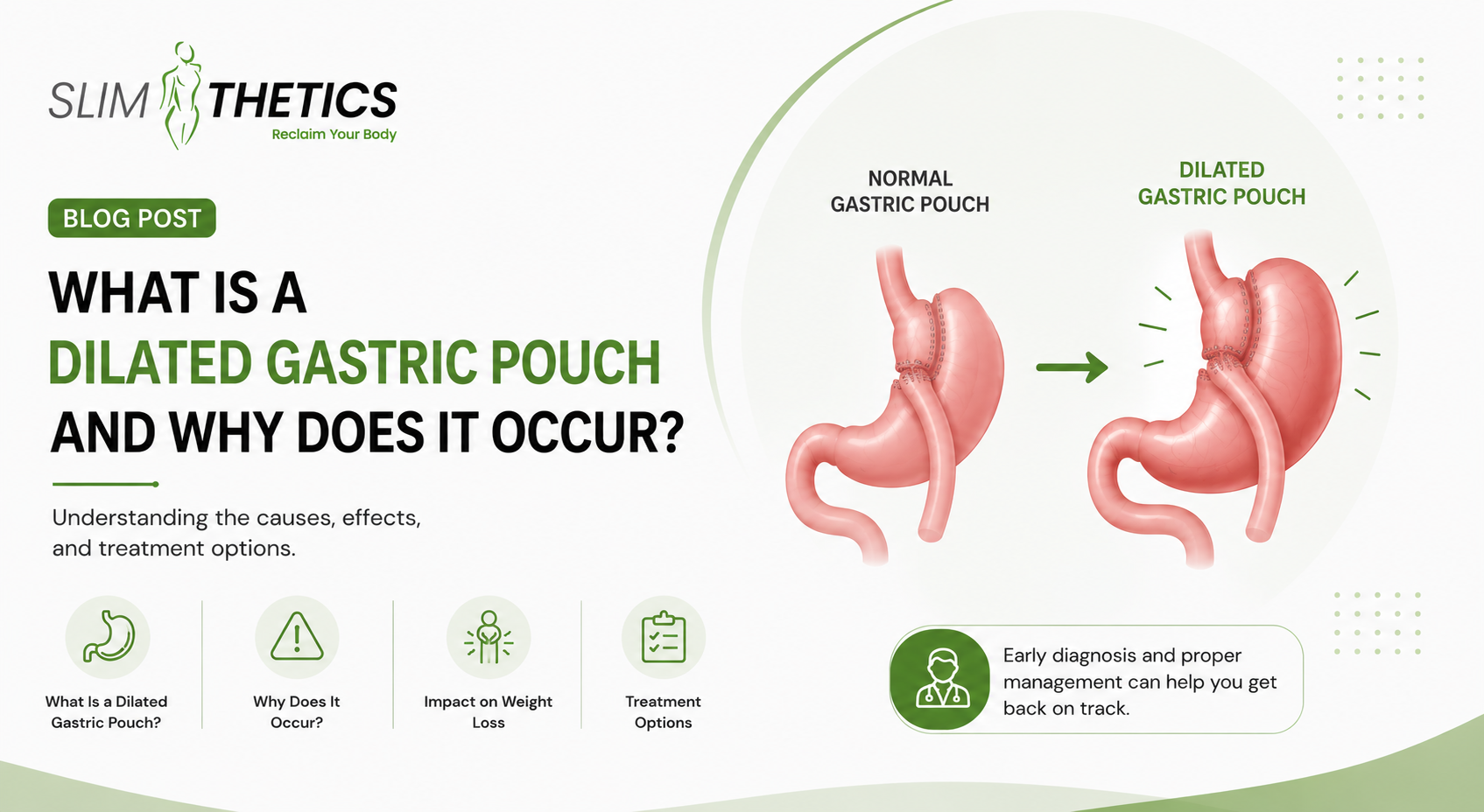
Gastric bypass surgery is one of the most effective weight loss surgery options for those who are suffering from extreme obesity. It functions by creating a small stomach pouch that restricts eating and makes the patient feel full earlier. But others may see things change over time, which can impact their results. This frequently raises the question: What is a dilated gastric pouch and why does it occur?
A dilated gastric pouch is a stomach pouch that’s expanded in size from bariatric surgery. It is normal to grow a little after surgery, but if it stretches too much, it can make it more difficult to feel full and can help cause weight gain. Dr. Tanseer Asghar at Slimthetics Clinic educates patients on how to safeguard their surgery with regular check-ups, healthy lifestyle changes, and diet.
What Is a Gastric Pouch?
In gastric bypass surgery, the surgeon creates a small gastric pouch out of the top portion of the stomach. The pouch is designed to give patients a small amount of food so they are satisfied with eating smaller meals.
Similarly, the smaller pouch can complement digestive system changes for substantial and enduring weight loss.
What Is a Dilated Gastric Pouch and Why Does It Occur?
What Is a Dilated Gastric Pouch and Why Does It Occur? is a question many patients ask. A dilated gastric pouch is the result of a progressive increase in the size of the stomach pouch. Patients may be able to eat more food before they are full as things get larger.
Gastric pouch stretching can be caused by various factors, such as eating too quickly or too much, lifestyle habits, and natural changes during healing. Some stretching of the tissue will occur, but if the tissue is enlarged beyond what is necessary, the surgery won’t be as effective.
What Causes a Dilated Gastric Pouch?
Enlargement of the gastric pouch can be a risk due to several reasons.
Frequent Overeating
Frequent overfilling of the stomach pouch can lead to stretching over time.
Large Portion Sizes
After surgery, the pouch will quickly become unable to hold larger amounts of food over time if portion control is not observed.
Poor Dietary Choices
Sugar, fat, and calorie-rich foods can lead to weight gain and promote poor eating habits that can cause weight to be regained.
Frequent Snacking
Graze continually during the day, so that the stomach doesn’t get time to rest between meals, and can make the person feel hungrier.
Lack of Follow-Up Care
Missing surgery with your bariatric surgeon or dietitian can leave you without the guidance you need to avoid unhealthy habits.
Signs of a Dilated Gastric Pouch
Sometimes when there is a stretched pouch, there are no symptoms initially. Some patients, however, experience a gradual change, such as:
A greater appetite, feeling hungry more frequently.
- Comfortable eating larger meals
- Reduced feeling of fullness
- Slow weight gain post bariatric surgery
- Frequent snacking
- Weight loss issues and inability to keep weight off
It is important to note that if these symptoms occur, you should not assume that the surgery has failed but seek a professional evaluation of your condition.
Can a Dilated Gastric Pouch Be Prevented?
In many cases, yes. Taking care of yourself post-op significantly lowers the chance of too much stretching of the pouch.
Helpful recommendations include:
- Portion Control
- Take your time to eat and chew your food.
- When you feel full, stop eating.
- Eat foods that are high in protein.
- Avoid sugary drinks.
- Limit high-calorie snacks.
- Stay physically active.
- Go for regular follow-ups.
These habits will aid in long-term weight management and protect your surgery outcomes.
What Happens If the Pouch Stretches?
If the pouch is only slightly stretched, you may not need any further treatment. Many patients get better results by adopting a healthy lifestyle with better food and exercise.
If you have a large gastric pouch and are still struggling to lose weight, however, you may need to be further evaluated by your surgeon. For some, revision bariatric surgery may be an option to achieve the benefits of the initial procedure once again.
When Should You See a Bariatric Specialist?
If you observe the following, you should get a gastric bypass consultation:
- Rapid weight regain
- Increased appetite
- Difficulty controlling portions
- Persistent hunger
- Concerns about your surgery results
Your aesthetician will be able to determine a cause and suggest the best treatment if they evaluate you early.
Why Choose Slimthetics Clinic?
Patients at Slimthetics Clinic get extensive support both before and after surgery to ensure the best long-term results.
Dr. Tanseer Asghar is an experienced bariatric surgeon specializing in customized treatment plans, nutritional advice, and continued support. He closely follows the development of every patient and offers practical tips to stop the stretching of the gastric pouch, healthy nutrition, and permanent weight loss. His patient-centered approach empowers people to make lifestyle changes that will last a lifetime.
Final Thoughts
What Is a Dilated Gastric Pouch and Why Does It Occur? It’s the gradual dilation of the gastric pouch following gastric bypass surgery, and it can decrease the sense of fullness and help trigger weight gain post-bariatric surgery. The good news is that sticking to the right diet, practicing portion control, exercising regularly, and attending follow-up appointments can help you maintain your results.
Dr. Tanseer Asghar is an expert bariatric surgeon at Slimthetics. He offers professional treatment and support for patients who have undergone weight loss surgery in order to ensure successful weight loss maintenance. If you have undergone gastric bypass or have concerns with your development, set up a consultation for individual advice and long-term treatment.