Skip to content
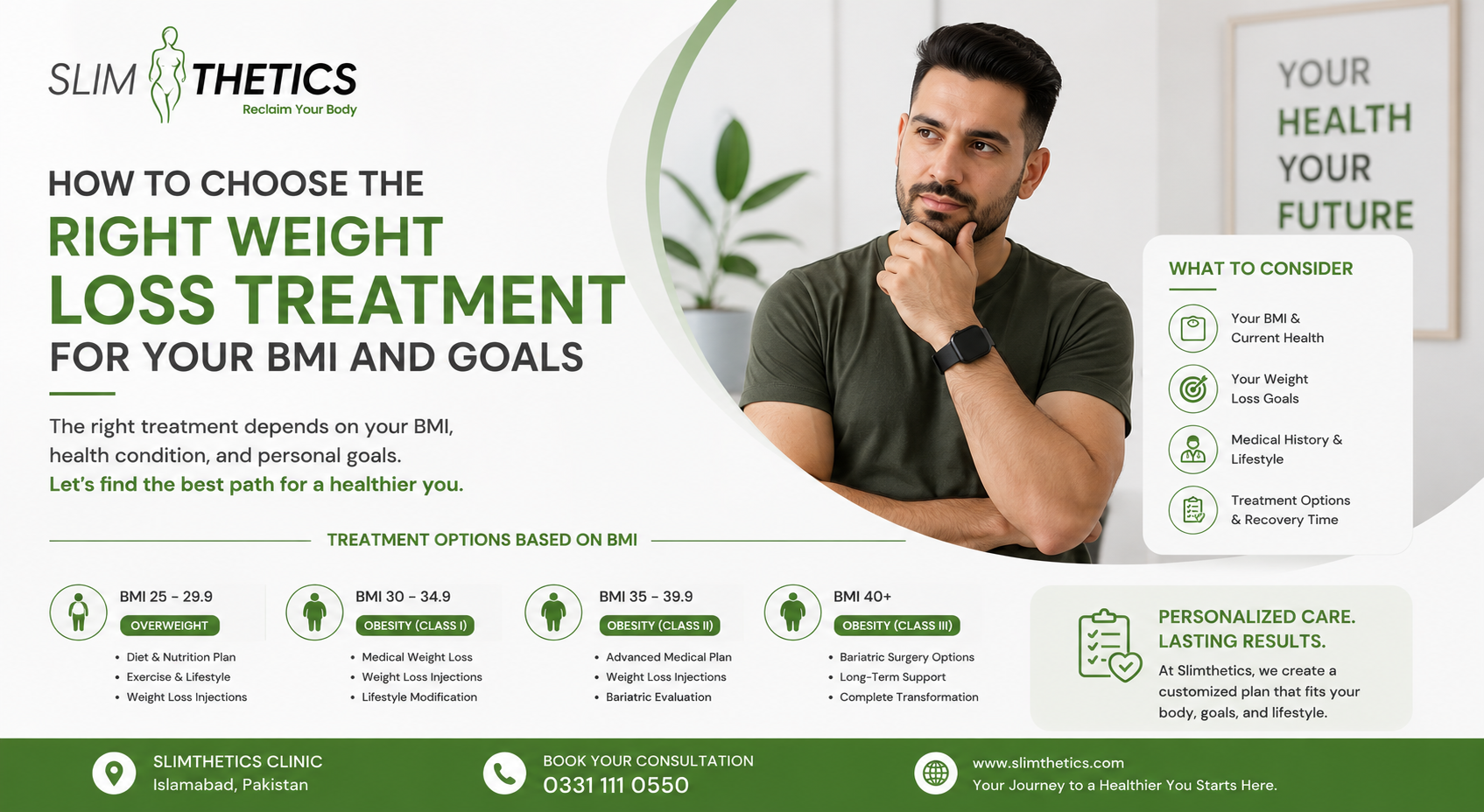
For some people, the most effective way to enhance well-being is to shed pounds. For some people, the best approach to improving health is to lose weight. The selection of a weight loss treatment is not just about selecting the fastest means of losing weight. The best choice will depend on your BMI, overall health, lifestyle, medical history, and weight loss objectives. Healthy lifestyle changes, medications, and bariatric surgery may be used to help some achieve their weight loss objectives. Many people ask How to Choose the Right Weight Loss Treatment for Your BMI and Goals? It’s important to know about the options so you can make an informed choice and select a treatment that will help you maintain your weight loss in the future.
Start by Understanding Your BMI
BMI, or Body Mass Index, is a screening tool that uses a person’s weight and height. It can aid health care professionals in determining if an individual is below normal weight, normal weight, overweight, or obese. BMI is not a comprehensive indicator of health, though. Other factors include your muscle mass, waist size, age, medical conditions, medications you are taking, and your lifestyle. This is why BMI alone should not be used for treatment decisions. A health and weight management professional can help you get a better look at your health and weight requirements.
Consider Your Weight Loss Goals
Another important factor to consider is your personal goals when selecting a treatment. A person trying to lose a few pounds might need to take a different approach than a person with serious health problems stemming from severe obesity.
Consider what you are trying to accomplish. It might boost your energy, help you lose weight, help prevent weight-related health issues, or help keep the weight off following weight loss.
Having realistic goals can help you make the weight loss journey easier. Your health and personal situation can also be used to set targets, which can be assisted by a healthcare worker.
Lifestyle Changes May Be the First Step
Most weight management plans include healthy lifestyle habits. Following a balanced diet can keep you in control of your calorie consumption and supply needed nutrients.
Eat more vegetables, fruits, lean proteins, whole grains, and healthy fats. Dietary changes, such as cutting back on highly processed foods, sugary drinks, and large amounts of food, can help maintain a healthy weight.
It is also crucial to get regular exercise. Overall fitness and energy expenditure can be improved through walking, cycling, strength training, swimming, or other exercises. Even if medication or surgery is advised, healthy eating and exercise are crucial for long-term success.
When Are Weight Loss Medications Considered?
For some who have not seen enough improvement in their weight loss with lifestyle changes alone, weight loss medications may be a viable option. They are suitable for patients with a BMI of <30, not suffering from any medical issues or taking certain medications, and who have good physical health.
Medications have various effects. Some can decrease appetite or make you feel full, and some can impair blood sugar and appetite control.
These drugs should be taken under medical supervision. A licensed health care provider can tell you what this medicine is, what it does, any problems you may have, and if the medicine is right for you.
When Is Bariatric Surgery an Option?
Bariatric surgery in Islamabad may be recommended for individuals who are obese and meet the proper medical criteria. This may be especially beneficial if obesity is causing health issues or if other treatments have proven ineffective.
Common procedures include gastric sleeve, gastric bypass, and mini gastric bypass. These techniques can decrease the size of the stomach and, in some cases, appetite and digestion.
Bariatric surgery is a big decision. The patient should be informed, prior to the procedure, of the procedure, recovery time, dietary requirements, risks, and the necessity of long-term follow-up.
How Does BMI Affect Treatment Selection?
Choosing the right weight loss treatment should never be based on BMI alone, and this should be the case when deciding on the right treatment for your weight loss goals. If the BMI is low, lifestyle changes may be advised, and if the BMI is very high, a more detailed treatment plan may be necessary.
Other factors that may be taken into consideration are type 2 diabetes, hypertension, sleep apnea, joint issues, and other obesity-related issues.
Weight loss endeavors in the past matter, too. The healthcare provider may consider other treatment options if the diet, exercise, and other measures have not been effective on a long-term basis.
Why Professional Guidance Matters
Self-prescribed weight loss treatments can lead to unrealistic expectations or risks. An expert can determine what’s going on in your health and offer a plan that’s right for you. Dr. Amna Naseer at Slimthetic will evaluate patients based on their health profile, weight loss goals, lifestyle, and past weight management efforts. During a consultation, patients have an opportunity to discuss their choices and build a plan for their weight management.
Cost Of Weight Loss Treatment In Islamabad
The cost of weight loss treatment in Islamabad varies by procedure and patient needs. At Slimthetics, bariatric procedures may cost approximately PKR 280,000 to PKR 500,000+. Factors include:
- Type of procedure
- Surgeon’s expertise
- Clinic facilities
- Anesthesia and tests
- Procedure complexity
- Follow-up care
At Slimthetics, Dr. Amna Naseer can recommend a suitable treatment and provide an accurate cost estimate.
Final Thoughts
The choice of a weight loss treatment should be made based on health, BMI, lifestyle, and individual goals. For some, lifestyle changes may be a good option; for others, medication or bariatric surgery may be necessary. Dr. Amna Naseer at Slimthetics will be able to help you understand your options better. So, visit us and get the best advice on how to choose the right option for weight loss in Islamabad.