Skip to content
Posted by Slimthetics - September 16, 2026
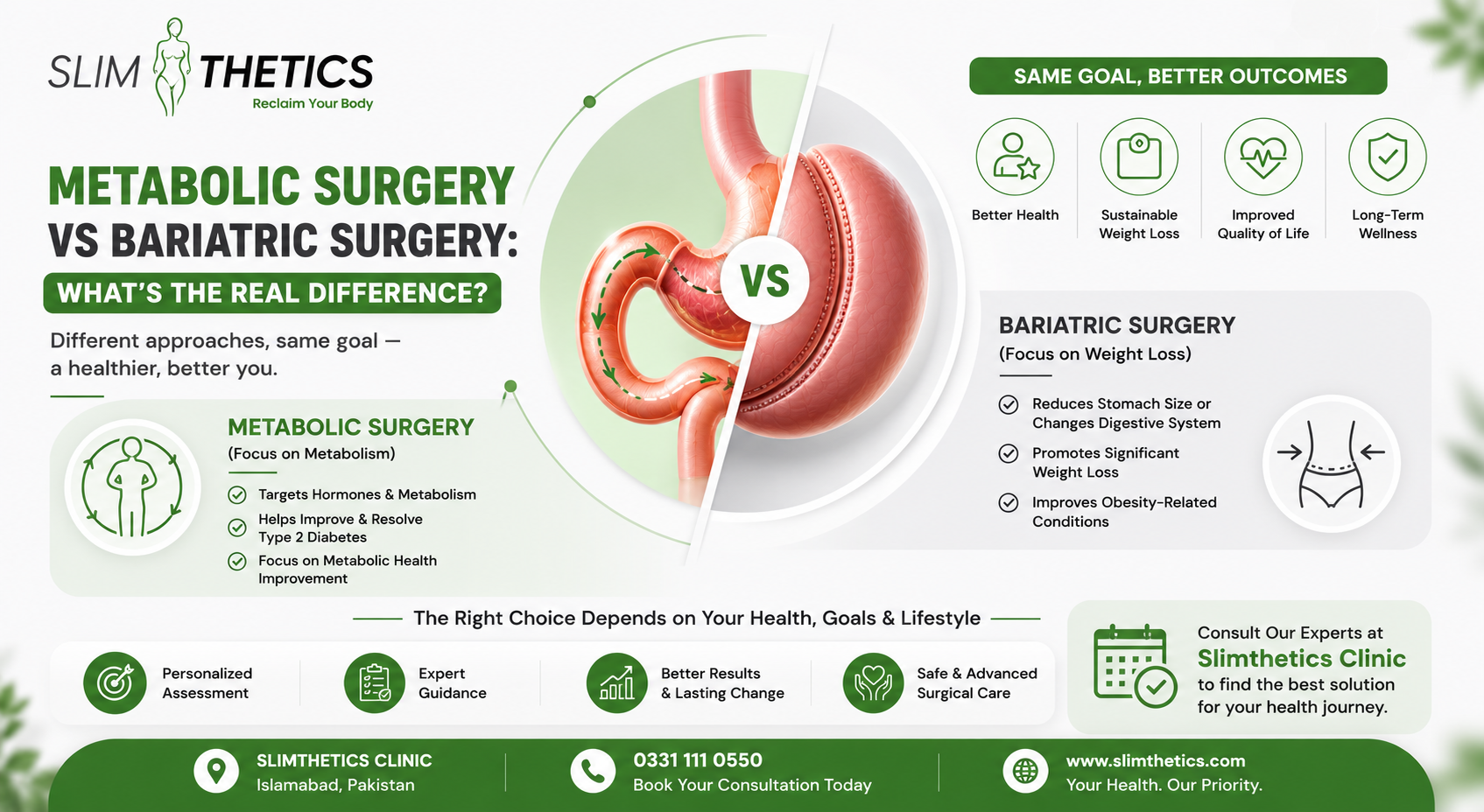
When talking about weight loss surgery, including bariatric surgery and metabolic surgery, these terms may seem like two entirely different types of surgery, yet they describe the same collection of surgical procedures. The distinction is typically the objective of the treatment. Bariatric surgery is mainly about losing a lot of weight and treating obesity, while metabolic surgery emphasizes improvement in metabolic diseases like type 2 diabetes and other obesity related metabolic issues. So, many people ask this question: Metabolic Surgery vs Bariatric Surgery: What’s the Real Difference? Knowing the difference may help patients make more informed decisions about their treatment choices.
What Is Bariatric Surgery?
Bariatric surgery is done for weight loss in obese individuals. These procedures alter the size of the stomach, the passage of food through the gastrointestinal system, or both.
The most popular bariatric surgery options are gastric sleeve, gastric bypass, and mini gastric bypass. These surgeries can lead to a decrease in appetite and impact certain hormones and nutrients that regulate appetite, depending on the procedure.
Bariatric surgery is typically recommended for someone who has not achieved significant long-term weight loss by making lifestyle changes and who has certain medical parameters.
What Is Metabolic Surgery?
Metabolic Surgery is a procedure performed with a high emphasis on metabolic health. These include diseases such as type 2 diabetes, high blood pressure, abnormal cholesterol, and other health issues that are linked to obesity.
The condition “metabolic” is used to indicate that these methods can be a benefit beyond weight loss. Improvements in metabolic health may be due to alterations in gut hormones, insulin sensitivity, appetite, and regulation of glucose.
So, metabolic surgery doesn’t necessarily involve a procedure completely different from bariatric surgery. If the intent of the surgery is primarily to lose weight, the same procedure is referred to as bariatric surgery, and if metabolic surgery is intended, it is known as metabolic surgery.
Metabolic Surgery vs Bariatric Surgery: What’s the Real Difference?
Metabolic Surgery vs Bariatric Surgery: What’s the Real Difference? When referring to bariatric surgery, one tends to hear people referring to weight loss and treating obesity. Metabolic surgery emphasizes more on the metabolic improvement, mainly around type 2 diabetes.
In fact, gastric bypass can be recommended for someone who struggles with obesity and poorly managed type 2 diabetes. The procedure can help with weight loss and also results in metabolic changes that can help control blood sugar.
But not all patients are candidates for surgery. A health professional should assess BMI, medical history, health status, past weight loss efforts, and overall health.
How Does Metabolic Surgery Affect Diabetes?
An important advantage of metabolic surgery is its ability to affect blood sugar. Some treatments can lead to better insulin sensitivity and blood sugar levels. In some cases, these changes can be relatively rapid, even before a significant amount of weight loss. This implies a significant role for hormonal and metabolic changes. But the surgery doesn’t guarantee diabetes will go away. The results depend on the type of diabetes, its length, your general health, and the procedure used.
Who May Benefit From These Procedures?
For those who have obesity and fall within the accepted medical criteria, bariatric/metabolic surgery may be considered. This could be particularly important for those with obesity-related conditions like type 2 diabetes, sleep apnea, hypertension, or joint issues.
Pre-surgery medical examination is required. Patients should also be aware of the fact that surgery is not “one size fits all”. The importance of long-term changes in diet, exercise, nutrition surveillance, and post-treatment management persists.
Dr. Tanseer Asghar is a bariatric surgeon at Slimthetics who can evaluate each patient’s health and then discuss the surgical options available to them. The best approach will vary based on the patient’s condition, goals, and medical needs.
Metabolic Surgery vs. Bariatric Surgery: What’s the Real Difference in Results?
These two methods can lead to significant weight loss and better health in obesity-related conditions. Results are based on the procedure, initial weight, lifestyle changes, medical history, and following the post-surgical guidelines.
It is also important for patients to be aware of the risks of each procedure, such as bleeding, infection, nutritional deficiencies, and others. Patients should understand the benefits and risks by undertaking a detailed consultation before making a decision.
Cost of Metabolic and Bariatric Surgery
The cost of metabolic and bariatric surgery in Pakistan varies depending on the procedure and individual needs. At Slimthetics, bariatric procedures may cost approximately PKR 280,000 to PKR 500,000+. Factors include:
- Type of procedure
- Surgeon’s expertise
- Clinic facilities
- Anesthesia and tests
- Procedure complexity
- Follow-up care
At Slimthetics, Dr. Tanseer Asghar can assess your needs, recommend a suitable procedure, and provide an accurate cost estimate.
Final Thoughts
Metabolic Surgery vs Bariatric Surgery: What’s the Real Difference? Bariatric surgery focuses on weight, while metabolic surgery focuses on the metabolic benefits of obesity. At Slimthetics, Dr. Tanseer Asghar can help you explore your choices and decide which option might work for you and your health. Visit Slimthetics and get the best advice from our experts.