Skip to content
Being overweight may impact an individual’s physical health, mobility, confidence, and quality of life. People who have tried dieting, exercise, and other lifestyle changes with minimal success may be candidates for bariatric surgery. Laparoscopic surgery is one of the most frequently used methods, in which small incisions and special instruments are used rather than making a single large incision in the abdomen.
What Is Laparoscopic Weight Loss Surgery?
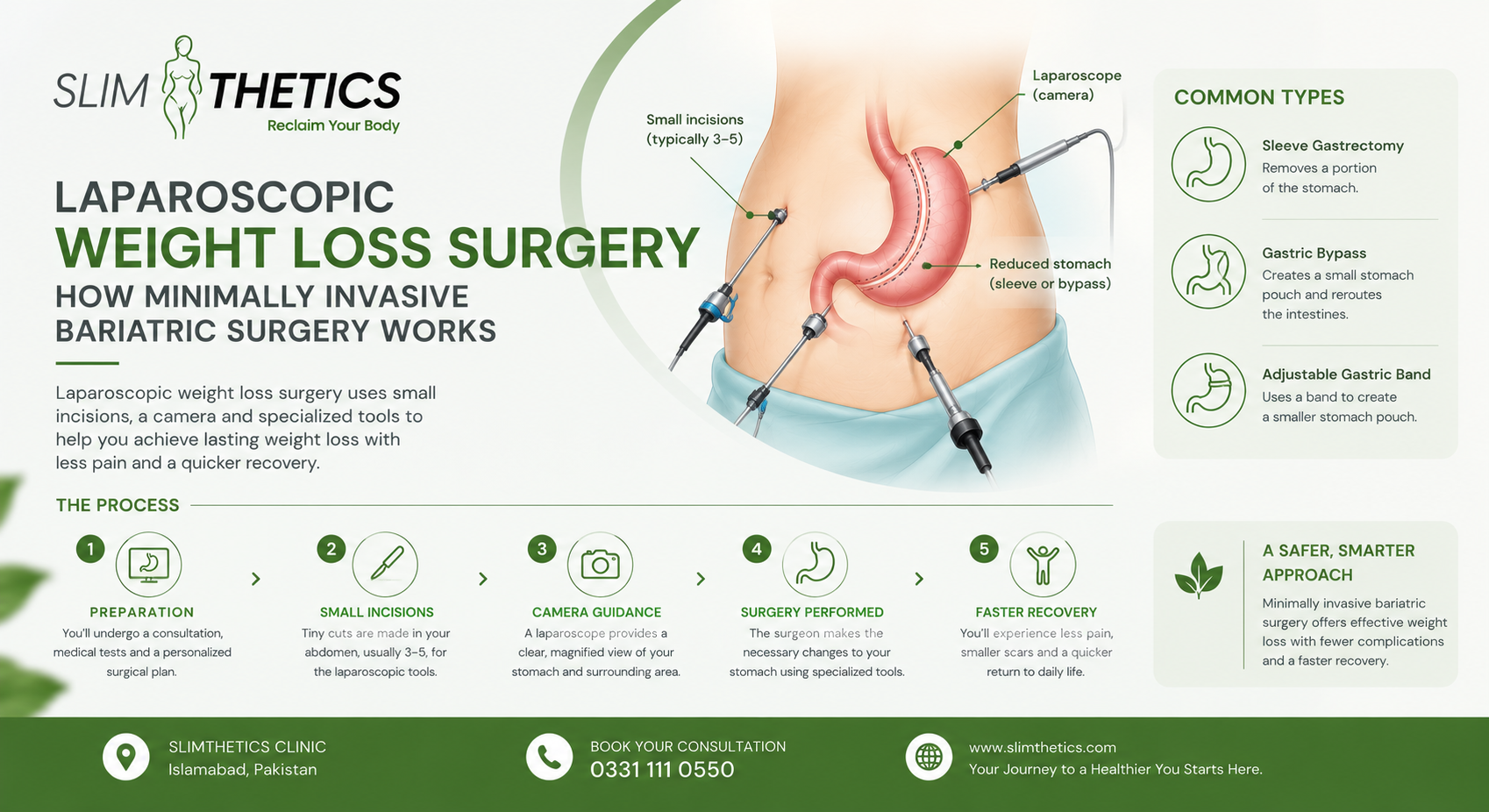
Laparoscopic Weight Loss Surgery : How Minimally Invasive Bariatric Surgery is works via a few small incisions in the abdomen. The surgeon passes a narrow camera (laparoscope) through one of the incisions and special surgical instruments through the other incisions.
A magnified image of the abdominal structures is displayed on a screen. This enables the surgeon to carry out the procedure with controlled and accurate movements.
Laparoscopic techniques may be employed in gastric sleeve surgery, gastric bypass surgery, and mini gastric bypass surgery, depending on the patient’s needs.
How Does the Procedure Work?
The patient is medically evaluated before surgery. This can involve blood tests, imaging, nutritional analysis, and a review of current health problems.
For laparoscopic surgery, the patient will be under general anesthesia. The surgeon will then make a few small cuts in the abdomen. These openings are used to pass a laparoscope and surgical instruments.
The precise surgical technique will depend on the procedure selected. For instance, gastric sleeve surgery involves taking out a significant amount of stomach tissue, while Gastric Bypass involves making the stomach smaller and redirecting food through a section of the intestine. Once the procedure is finished, the instruments are taken out, and the small incisions are closed.
Why Is Laparoscopic Surgery Used?
The major benefit of laparoscopy is that it is a smaller-incision surgery as compared to open surgery. This can help minimize scarring and tissue damage. In some cases, open surgical procedures might also have more post-operative discomfort and a longer recovery period. Recovery will, however, differ according to the procedure, overall health, and individual recovery. It is not always appropriate to use laparoscopic surgery for everyone. After taking a history and patient needs, the surgeon needs to figure out the safest way to proceed.
What Are the Common Laparoscopic Bariatric Procedures?
Gastric Sleeve
During gastric sleeve surgery, the surgeon removes most of the stomach and leaves a tube-shaped stomach. The small stomach can aid patients with portion control and help them feel full quicker.
Gastric Bypass
Gastric bypass creates a smaller-sized stomach pouch and reroutes part of the small intestine. This restricts food consumption and alters digestion and absorption of nutrients.
Mini Gastric Bypass
Mini gastric bypass also creates a smaller stomach pouch and connects it to the small intestine. Physicians may prescribe this medication for individual patients depending on patient health and weight loss objectives.
Recovery After Laparoscopic Surgery
In addition to learning how Laparoscopic Weight Loss Surgery works, it is important to understand the recovery process. Liquid foods are typically the first diet phase, then slowly transition to soft foods and eventually solid foods as directed by the surgeon. During early recovery, patients will generally walk, but they should not perform strenuous exercise or heavy lifting until they receive medical clearance. Follow-up appointments are crucial for tracking weight loss, nutrition, healing, and potential complications. Patients may require vitamin and mineral supplements based on what procedure they undergo.
Potential Benefits and Risks
Laparoscopic bariatric surgery can help with substantial weight loss and may alleviate obesity-related health issues like type 2 diabetes, high blood pressure, and sleep apnea. But surgery has its risks. These can include bleeding, infection, blood clots, digestive issues, nutritional deficiencies, and anesthesia complications.
Choosing a Bariatric Surgeon
Selecting the right surgeon is a crucial part of the procedure. Your surgeon should check your health, discuss options for your surgery, and give you clear directions on how to prepare and recover. At Slimthetics, Dr. Tanseer Asghar will evaluate patients who are considering bariatric surgery and discuss the appropriate minimally invasive treatment method according to each patient’s needs and goals.
Cost Of Laparoscopic Weight Loss Surgery
The cost of laparoscopic weight loss surgery in Pakistan varies depending on the procedure and individual needs. At Slimthetics, bariatric procedures may cost approximately PKR 280,000 to PKR 500,000+. Factors include:
- Type of procedure
- Surgeon’s expertise
- Clinic facilities
- Anesthesia and tests
- Procedure complexity
- Follow-up care
At Slimthetics, Dr. Tanseer Asghar can assess your needs, recommend a suitable procedure, and provide an accurate cost estimate.
Final Thoughts
Laparoscopic Weight Loss Surgery: How Minimally Invasive Bariatric Surgery Works covers the ways in which the latest weight loss surgery techniques can be performed using the very small incisions in the abdomen. Eligible people can achieve considerable weight loss from the gastric sleeve, gastric bypass, and mini gastric bypass. At Slimthetics, Dr. Tanseer Asghar helps patients understand surgical options and create an individual surgical plan. So, visit us and get the best treatment for laparoscopic weight loss surgery.