Skip to content
Posted by Slimthetics - September 15, 2026
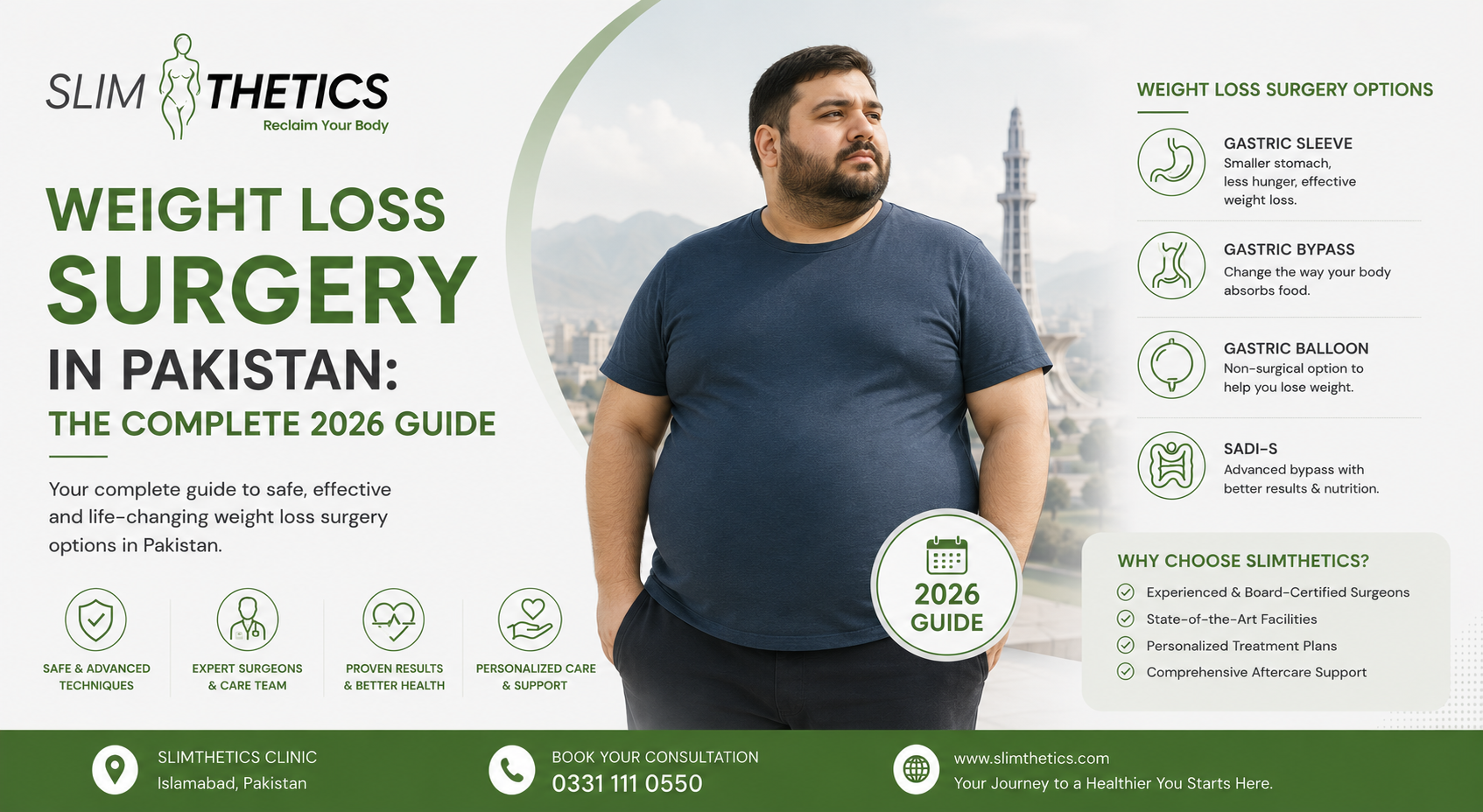
Obesity can impact looks. It can also contribute to conditions like type 2 diabetes, high blood pressure, sleep apnea, and joint issues. Weight loss surgery is an option for those who are eligible if lifestyle changes and other non-surgical techniques are not going to work.
In this blog, we will discuss Weight Loss Surgery in Pakistan: The Complete 2026 Guide the types of patients who may benefit, recovery, risks, and costs in Pakistan.
What Is Weight Loss Surgery?
Bariatric surgery, also called weight loss surgery, is a surgery that involves making changes to the stomach and/or digestive system to allow people to lose a substantial amount of weight. Gastric sleeve surgery, gastric bypass surgery, and mini gastric bypass are the most popular ones. These interventions can limit food consumption, and some can also impact hormones and appetite. Surgery isn’t a very rapid way of fixing things. The outcome is long-term if the diet, exercise, medical monitoring, and lifestyle changes are maintained.
Who May Be Suitable for Surgery?
The first step to weight loss surgery in Pakistan: The Complete 2026 Guide is to realize that although weight loss surgery is a viable option for some people, not everyone who wants it is an appropriate candidate.
There are a number of factors doctors take into account, like BMI, obesity-related health problems, past weight reduction attempts, age and medical background, and general health.
Comprehensive weight management services can be beneficial for individuals with obesity-related conditions like type 2 diabetes, high blood pressure, or sleep apnea. However, an individual medical evaluation is required to determine eligibility.
Types of Weight Loss Surgery
Gastric Sleeve
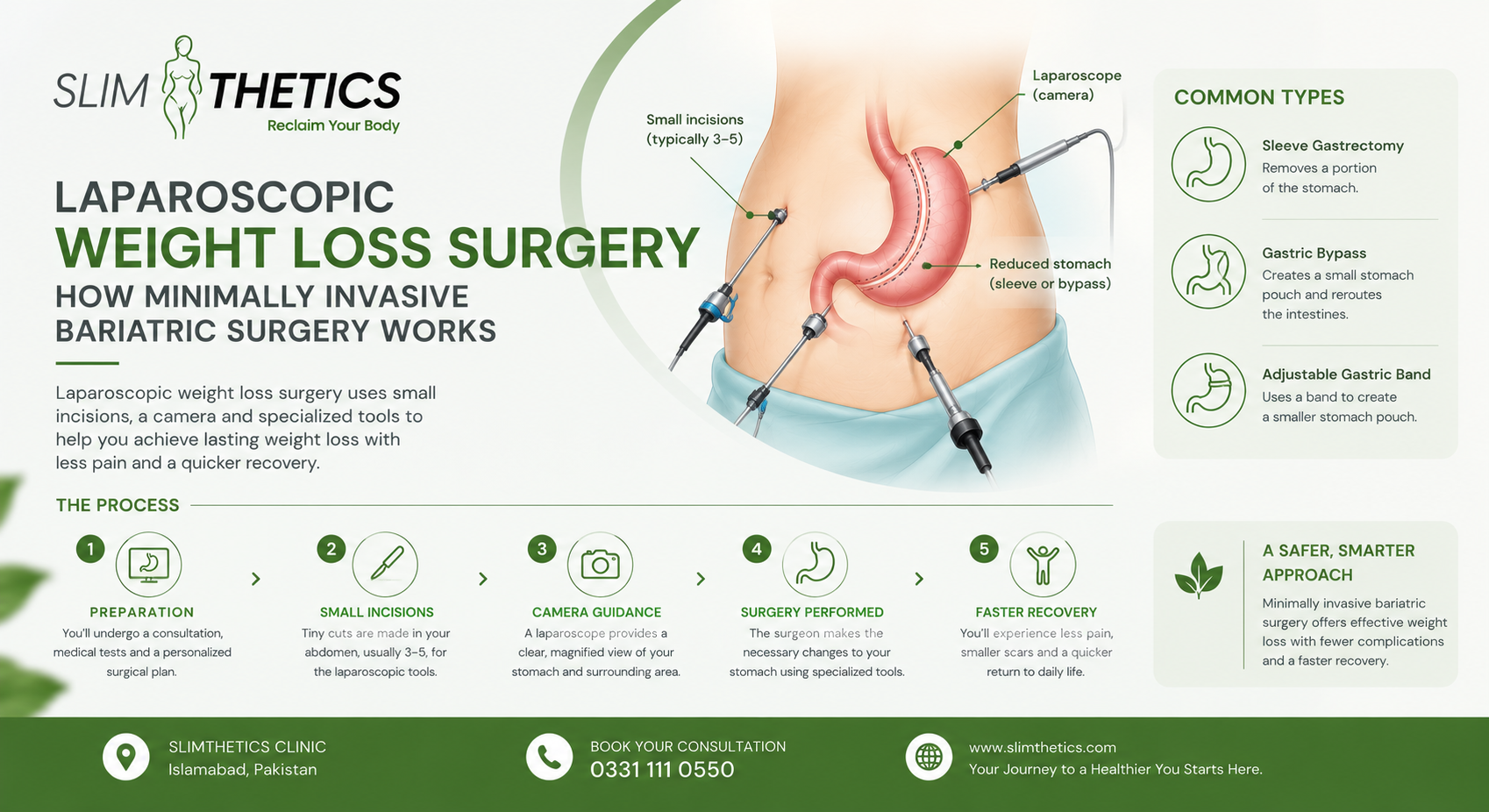
In gastric sleeve surgery, a large portion of the stomach is removed, leaving a smaller, tube-shaped stomach. The smaller stomach capacity may enable patients to eat smaller meals and to feel full faster. Unlike gastric bypass surgery, it is not performed by bypassing the intestines.
Gastric Bypass
Gastric bypass surgery consists of making the stomach pouch smaller and diverting a portion of the small intestine. This restricts food consumption and alters the absorption of nutrients. It also has metabolic actions that can help to improve some of the complications associated with obesity.
Mini Gastric Bypass
In mini gastric bypass, the stomach is made into a smaller pouch, and it is attached to a portion of the small intestine. It is another surgical procedure for a small number of patients who are obese. This will vary based on the BMI, medical status, dietary habits, past surgeries, and the specific aims of the patient.
What Are The Benefits of Weight Loss Surgery?
Weight Loss Surgery in Pakistan: The Complete 2026 Guide wouldn’t be complete without talking about the potential benefits. For those who meet the criteria for weight loss surgery, bariatric surgery may offer significant and lasting weight loss. It can also have beneficial effects on health conditions associated with obesity, such as type 2 diabetes, high blood pressure, sleep apnea, and mobility problems. But the results differ from person to person. Surgery should be considered as a component of a weight management program.
What Is Recovery Like?
Many of today’s bariatric procedures are performed via a minimally invasive approach, which can have a beneficial impact on recovery time as compared to open surgery.
A diet progression is usually required after surgery. Liquid diets may be used initially and then gradually advanced to soft foods and eventually regular, nutritious diets. Follow-up is important to monitor healing, nutrition, weight loss, and any deficiencies. Some patients may require vitamin and mineral supplements following certain procedures.
Are There Risks?
Any major surgery has its risks, and bariatric surgery is no exception. These may range from bleeding, infection, blood clots, digestive issues, nutritional deficiencies, or complications arising from anaesthesia. Depending on the procedure, concerns may be long-term. Abiding by dietary guidelines and making regular follow-up appointments helps to minimize some risks and to detect problems early. A detailed consultation enables the patient to become aware of the possible benefits and risks prior to deciding on surgery.
How To Choose a Weight Loss Surgeon?
One of the most crucial steps in the treatment process is choosing an experienced bariatric surgeon. The surgeon should assess your health, discuss the surgical options available, and discuss the patient’s pre- and post-operative expectations.
Dr. Tanseer Asghar at Slimthetics can evaluate the patient who wants to have surgery for weight loss and discuss the options with them depending on their health and weight loss goals.
Weight Loss Surgery Cost in Pakistan
The cost of weight loss surgery in Pakistan varies depending on the procedure and individual needs. At Slimthetics, bariatric procedures may cost approximately PKR 280,000 to PKR 500,000+. Factors include:
- Type of procedure
- Surgeon’s expertise
- Clinic facilities
- Anesthesia and tests
- Procedure complexity
- Follow-up care
At Slimthetic, Dr. Tanseer Asghar can assess your needs, recommend a suitable procedure, and provide an accurate cost estimate.
Life After Weight Loss Surgery
The Weight Loss Surgery in Pakistan: The Complete 2026 Guide should also emphasize the need for lifestyle changes that will last a lifetime. While surgery can help to decrease stomach size, healthy habits are still important. Patients should strive for healthy foods, portion sizes, exercise, healthy fluids, and recommended supplements. Scheduling regular medical check-ups can also help track weight loss and nutrition.
Final Thoughts
The Weight Loss Surgery in Pakistan: The Complete 2026 Guide shows that bariatric surgery can be an effective option for eligible people struggling with obesity. Gastric sleeve, gastric bypass, and mini gastric bypass have different benefits and considerations. At Slimthetics, Dr. Tanseer Asghar can help patients understand their options and develop a treatment plan based on their health and weight loss goals.